7 Types of Ships That Keep the Global Economy Moving
When people think of ships, they usually picture one image: a giant vessel stacked with colorful containers. But the global fleet is far more diverse. Each type of ship is a specialized tool, designed for a specific kind of cargo — and each one plays a distinct role in globalization.
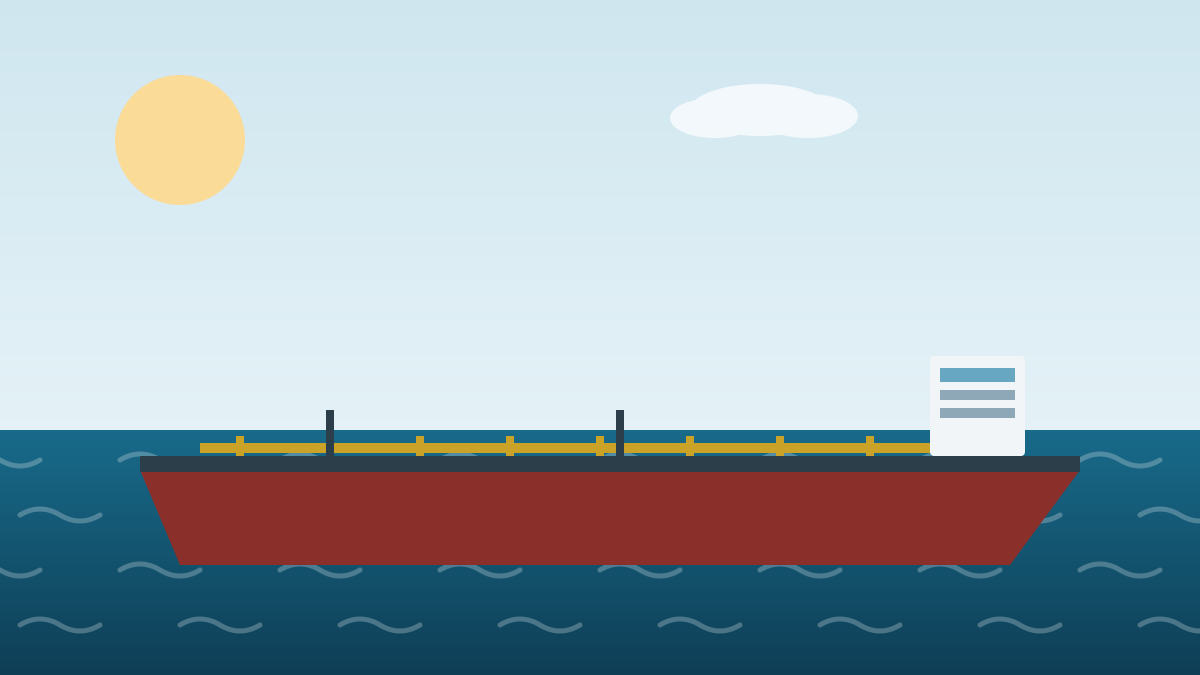
1. Container Ships: The Retail Backbone
These are the workhorses of consumer trade. Electronics, clothing, furniture, toys, appliances — almost anything sold in a store likely traveled in a container. Their standardized cargo system connects factories in one hemisphere to shelves in another with remarkable efficiency.
Role in globalization: they make distributed manufacturing possible, allowing companies to produce where costs are lowest and sell everywhere.
2. Oil Tankers: Fueling the World
Crude oil tankers are among the largest moving structures ever built. The biggest, known as VLCCs (Very Large Crude Carriers), can transport around two million barrels of oil in a single voyage. Product tankers, a smaller category, carry refined fuels like gasoline and diesel.
Role in globalization: they connect energy-producing regions with energy-consuming ones, keeping industry, transport, and electricity generation running worldwide.
3. Bulk Carriers: Feeding and Building Nations
Bulk carriers transport unpackaged dry cargo poured directly into massive holds: grain, iron ore, coal, cement, fertilizers, and sugar. Their distinctive hatched decks make them easy to recognize.
Role in globalization: they move the raw materials of civilization. The steel in skyscrapers and the wheat in bread often crossed an ocean in a bulk carrier.
4. LNG and Gas Carriers: Energy in Spherical Tanks
Recognizable by their dome-shaped or prismatic tanks, these vessels carry liquefied natural gas cooled to approximately -162°C. This technology turned natural gas into a globally traded commodity rather than a regional one limited by pipelines.
Role in globalization: they allow countries without pipeline connections to import cleaner-burning energy from across the world.
5. Car Carriers: Floating Parking Garages
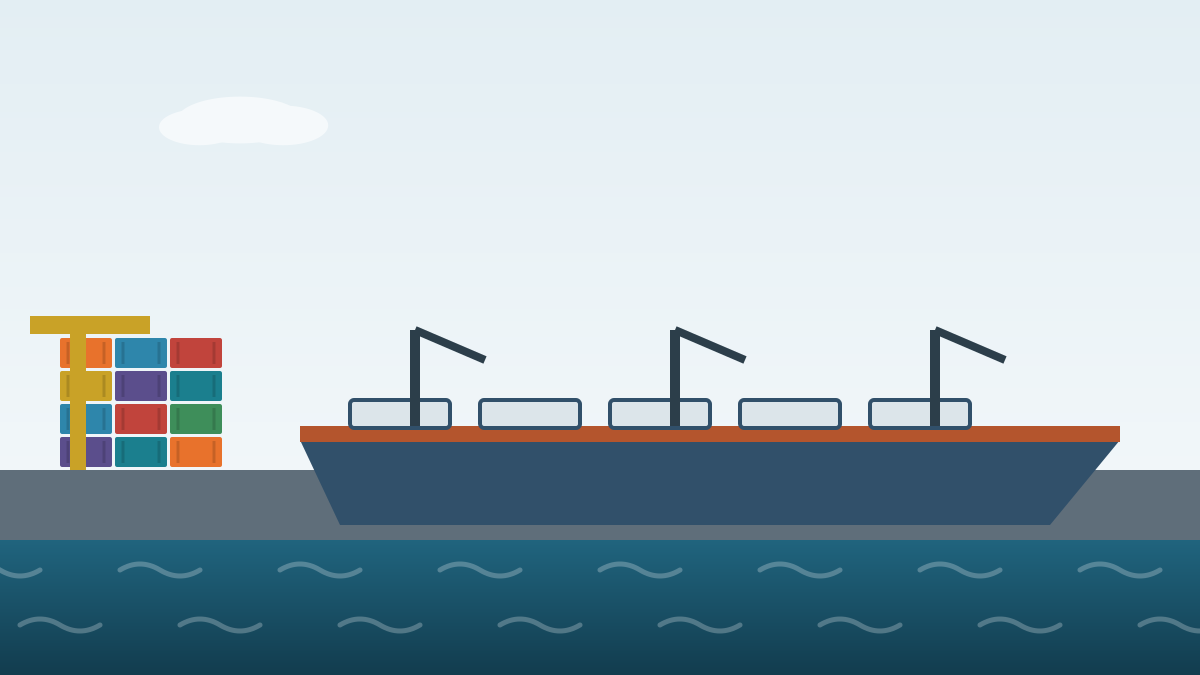
Officially called RoRo ships (Roll-on/Roll-off), these box-shaped vessels can hold thousands of vehicles that drive on and off through built-in ramps. A single large car carrier can transport over 8,000 automobiles.
Role in globalization: they make the international automotive market possible, letting manufacturers sell vehicles on every continent.
6. Refrigerated Ships: Fresh Food Across Oceans
Known as "reefers," these vessels — and refrigerated containers on regular ships — maintain precise temperatures for perishable goods. Bananas from the tropics, salmon from cold waters, and flowers cut just days earlier all depend on this cold chain at sea.
Role in globalization: they put seasonal and regional foods on tables worldwide, all year round.
7. Ferries and Passenger Ships: Moving People
Not all maritime trade involves cargo. Ferries connect islands and coastal cities, carrying commuters, tourists, and vehicles daily. Cruise ships, meanwhile, form a major tourism industry that supports port economies around the globe.
Role in globalization: they move people, labor, and tourism revenue between regions and cultures.
Why Specialization Matters
Each ship type represents decades of engineering optimization. A tanker cannot carry containers; a bulk carrier cannot transport cars. This specialization is exactly what makes maritime trade so efficient — every cargo travels in the vessel designed to move it at the lowest possible cost.
Conclusion
The global fleet is like a toolbox: different instruments for different jobs, all working together. Next time you see a ship on the horizon, look closer — its shape will tell you exactly what part of the world economy it carries.
Frequently Asked Questions
Which type of ship carries the most cargo?
By total tonnage, bulk carriers and tankers move the largest volumes, since raw materials like ore, coal, grain and oil dominate seaborne trade by weight. By value of goods, container ships lead, carrying most manufactured products.
How big can an oil tanker be?
The largest crude carriers in regular service, known as VLCCs, can transport around two million barrels of oil per voyage. Even larger classes existed historically, but port and canal limits make VLCCs the practical giants of today.
Why are some ships called Panamax or Neopanamax?
Ship classes are often named after the infrastructure that limits them. Panamax vessels fit the original Panama Canal locks; Neopanamax fits the larger locks opened in 2016. Similar naming exists for Suez and other constraints.
What is the Baltic Dry Index?
It is a daily index compiled in London from shipbroker assessments of the cost of hiring bulk carriers on major routes. Because it reflects real demand to move raw materials, it is widely watched as a barometer of global industrial activity.
Sources & Further Reading
- UNCTAD — Review of Maritime Transport: unctad.org
- International Maritime Organization (IMO): imo.org
- World Shipping Council: worldshipping.org